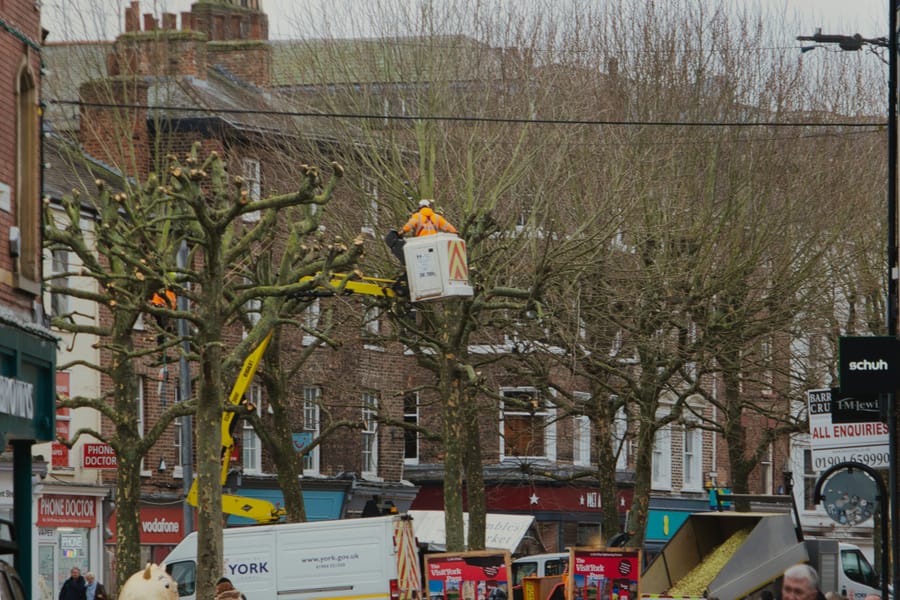
Pollarding in Sheffield
Keep large trees in check for the long term. Pollarding removes the upper branches back to the main framework, controlling size and encouraging vigorous new growth - when done correctly by qualified surgeons at the right time.
Get a Free QuoteProfessional Tree Pollarding Across Sheffield
Pollarding is an ancient tree management technique with a long history in Britain and Europe. It involves removing the upper branches of a tree back to the main trunk or a defined framework of branches, stimulating vigorous new growth from the cut points. When carried out regularly and on suitable species, it is an effective long-term method for controlling the size of large trees in confined spaces.
It is important to understand that pollarding is not appropriate for every tree or every situation. Used on the right species, started at the right stage of the tree's life, and repeated on a consistent cycle, it can keep trees healthy and manageable for many decades. Applied incorrectly - to species that do not respond well, or after too long an interval - it can seriously damage or kill a tree.
Our NPTC qualified team has extensive experience carrying out pollarding across Sheffield and South Yorkshire, and will always advise honestly on whether it is the right approach for your tree.
Get a Free Quote
Which Species Are Suitable for Pollarding?
Pollarding works best on species that produce vigorous regrowth from the cut points. The most commonly pollarded trees in the UK include:
- Willow (Salix spp.) - perhaps the classic pollarding subject, willows respond extremely well and are frequently managed this way near water.
- Lime (Tilia spp.) - very commonly pollarded, including on urban streets throughout Sheffield. Lime trees produce prolific epicormic regrowth and tolerate pollarding well.
- London plane (Platanus x hispanica) - widely pollarded in urban areas across the UK and Europe. Tolerates hard cutting very well.
- Ash (Fraxinus excelsior) - traditionally pollarded for fencing timber and fodder. Responds well when the work is started on younger trees.
- Oak (Quercus spp.) - can be pollarded, particularly when started young. Ancient pollard oaks are among the most ecologically valuable trees in Britain.
- Horse chestnut and sycamore - can be managed by pollarding but require careful timing and technique.
When to Start Pollarding - Young vs Mature Trees
Ideally, pollarding is started when a tree is young - typically once it has reached the desired framework height, before the trunk and main branches have grown very thick. Starting at this stage means the cut wounds are smaller, heal more effectively, and the tree establishes a strong pollard framework over its early life.
Pollarding a large, mature tree that has never been pollarded before is a much higher-risk operation. The large wounds produced can be difficult for the tree to compartmentalise, and the shock of losing so much of its canopy at once can be fatal for some species. We assess each tree individually before recommending pollarding and will advise you clearly if we have concerns about the tree's ability to respond safely.
The Importance of a Regular Cycle
Once a tree has been established as a pollard, it needs to be re-pollarded on a regular cycle - typically every 2-5 years depending on species and vigour. Allowing too much time to pass between pollards means the new growth becomes heavy and structurally attached to the pollard points, making the next cycle increasingly difficult and risky. A well-managed pollard cycle keeps the tree manageable, healthy and looking its best.
Pollarding vs Topping
It is essential to distinguish between proper pollarding and topping, which is widely considered bad practice. Topping involves cutting a tree back to stubs without regard for growing points, species suitability or long-term management. It produces weak, fast-growing regrowth, leaves large open wounds, and seriously compromises the tree's structure and health. Pollarding, by contrast, is a deliberate, species-appropriate management technique planned for the long term. We do not carry out topping.
Pollarding Questions
Pollarding is a tree management technique that involves removing the upper branches of a tree back to the main trunk or an established framework of branches. This stimulates the production of vigorous new shoots from the cut points. It is used to control tree size over the long term, particularly for large-growing species in confined spaces. Pollarding must be done on suitable species, at the right time of year, and on a regular cycle to be effective and safe for the tree.
The best candidates for pollarding are species known to produce vigorous epicormic regrowth - including willow, lime, London plane, ash and oak. Horse chestnut, sycamore and some other species can also be pollarded with care. Not all trees respond well: conifers, for example, do not regenerate from old wood and cannot be pollarded. We always assess the species and condition of your tree before recommending pollarding and will advise honestly if the tree is not suitable.
The ideal timing varies by species, but pollarding is most commonly carried out in late winter (February to early March) when trees are still dormant. This allows the tree to put on vigorous new growth quickly once the growing season begins. Some species - such as oak - are better pollarded in mid-summer to reduce the risk of bleeding and infection. We will advise on the best time for your specific tree when we provide a quote.
Once a tree has been established as a pollard, it should be re-pollarded on a regular cycle - typically every 2-5 years for vigorous species, or every 3-7 years for slower-growing ones. The key is not to leave the interval too long. As the new growth gets larger and heavier, the structural attachment at the pollard points becomes increasingly risky to cut back, and the shock to the tree of losing a very large canopy at once becomes greater. Regular management keeps the cycle manageable and the tree healthy.
No - they are fundamentally different. Pollarding is a planned, species-appropriate management technique carried out on a regular cycle, with cuts made to established pollard points that the tree knows how to respond to. Topping is the indiscriminate cutting back of a tree to stubs, with no regard for species suitability, cut placement or long-term management. Topping produces structurally weak regrowth, creates large open wounds prone to decay, and can seriously damage or kill a tree. We do not carry out topping and always recommend against it.
Related Services
Need Tree Pollarding in Sheffield?
Get in touch for a free, no-obligation assessment. We will advise on whether pollarding is right for your tree and give you a written quote before any work begins.